Introduction
The demand for safer, faster, and more effective training solutions is driving organizations toward next-generation simulation technologies. As industries become increasingly complex and equipment grows more sophisticated, traditional training methods often struggle to provide the level of realism and engagement required to prepare personnel for real-world operations.
This is where Extended Reality (XR) Simulation is transforming the training landscape.
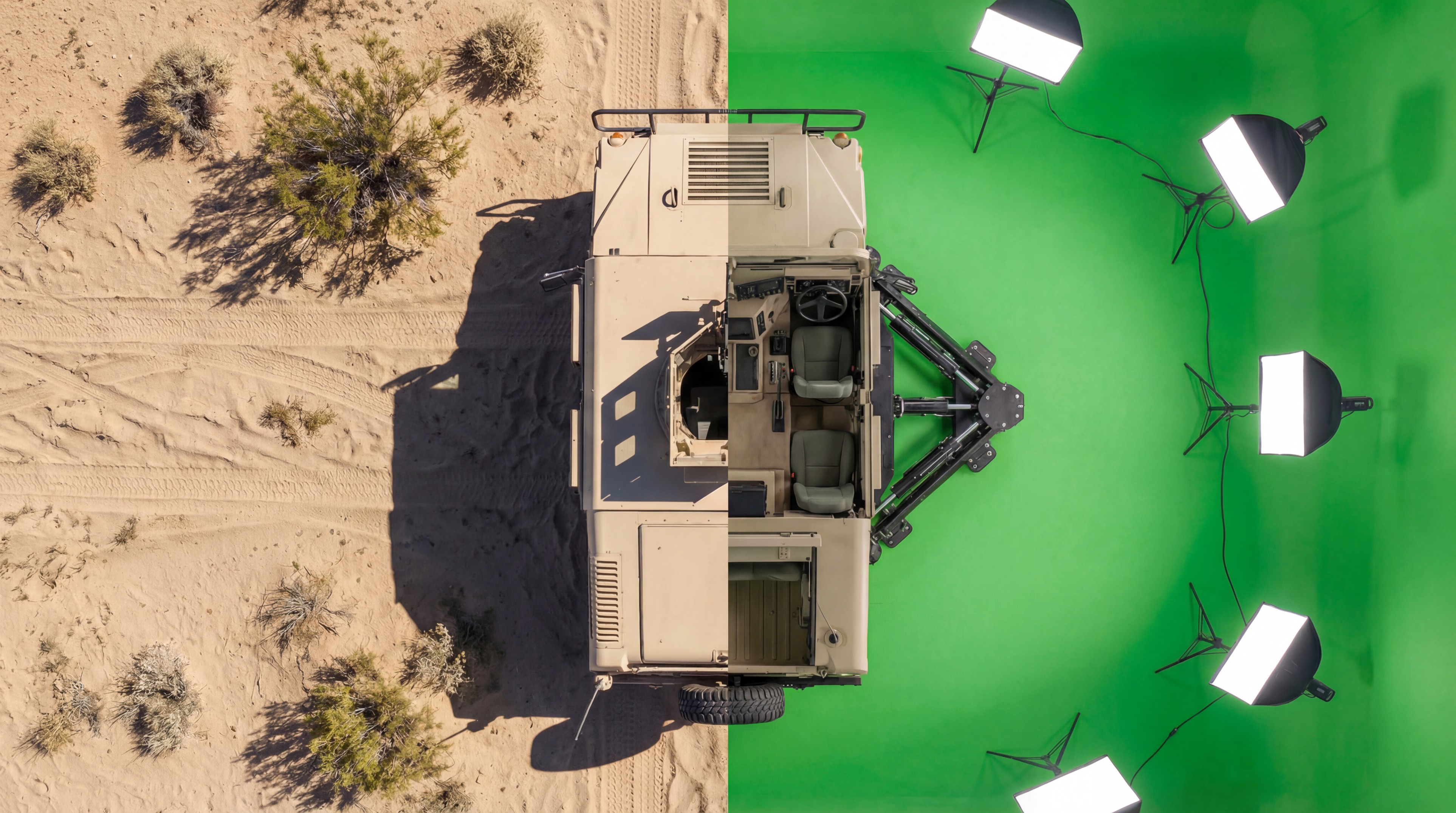
By combining the immersive capabilities of Virtual Reality (VR), the contextual awareness of Augmented Reality (AR), and the interactive power of Mixed Reality (MR), XR simulation creates highly realistic learning environments that bridge the gap between physical and digital worlds.
Today, XR simulation is rapidly becoming a critical training tool across defense, aviation, maritime, transportation, heavy equipment, healthcare, and industrial sectors.
What is XR Simulation?
Extended Reality (XR) is an umbrella term that encompasses multiple immersive technologies:
Virtual Reality (VR)
A fully digital environment where users are completely immersed in a virtual world through head-mounted displays.
Augmented Reality (AR)
Digital information is overlaid onto the real world, enhancing the user's perception without replacing their physical surroundings.
Mixed Reality (MR)
Virtual objects interact with real-world environments, allowing users to manipulate and engage with both physical and digital elements simultaneously.
XR Simulation combines these technologies to create realistic, interactive training experiences that closely replicate operational environments.
Why Traditional Training is No Longer Enough
Organizations face increasing challenges when training personnel using conventional methods.
Common limitations include:
High operational costs
Limited equipment availability
Safety risks
Equipment wear and tear
Restricted access to operational assets
Difficulty reproducing emergency situations
In many industries, training opportunities are constrained by operational schedules, environmental conditions, or the cost of using real equipment.
XR simulation removes many of these barriers by enabling realistic practice within a safe and controlled environment.
The Power of Immersive Learning
Research consistently demonstrates that people learn more effectively through experience than through passive observation.
XR simulation creates immersive experiences where trainees actively participate in tasks rather than simply watching demonstrations or reading manuals.
This approach improves:
Knowledge retention
Procedural accuracy
Decision-making speed
Situational awareness
Confidence levels
Operational readiness
When learners physically interact with virtual environments, training becomes more engaging, memorable, and effective.
XR Applications Across Industries
Defense and Military Training
Military organizations use XR simulation for:
Vehicle familiarization
Tactical mission rehearsal
Maintenance training
Crew coordination exercises
Combat scenario simulation
Command and control training
Soldiers can practice complex missions repeatedly without the risks associated with live exercises.
Aviation Training
XR technologies are increasingly used for:
Aircraft familiarization
Ground support equipment training
Maintenance procedures
Emergency response exercises
Airport operations training
Personnel can learn procedures before interacting with operational aircraft and equipment.
Maritime Training
XR simulation supports:
Bridge operations
Navigation training
Damage control exercises
Emergency response procedures
Vessel maintenance activities
Complex maritime scenarios can be recreated without requiring access to operational vessels.
Heavy Equipment and Transportation
Operators can safely practice:
Excavator operations
Crane handling
Forklift procedures
Truck driving
Mining vehicle operation
Construction equipment training
This significantly reduces operational risks and training costs.
AI-Powered XR Training
Artificial Intelligence is further enhancing the effectiveness of XR simulation.
Modern AI-driven systems can:
Monitor trainee performance
Detect mistakes in real time
Provide corrective guidance
Generate personalized training paths
Evaluate competency levels
Produce detailed performance reports
AI-powered virtual instructors act as digital mentors, helping trainees learn faster and more effectively.
As AI technology continues to evolve, training environments will become increasingly adaptive and personalized.
Digital Twins and XR
One of the most powerful developments in XR simulation is the integration of Digital Twin technology.
A digital twin is a virtual representation of a real-world asset, system, or environment.
When combined with XR technologies, digital twins enable organizations to:
Visualize equipment in 3D
Simulate maintenance procedures
Conduct virtual inspections
Train personnel using real asset data
Improve operational planning
This creates highly realistic and accurate training experiences that mirror actual operational conditions.
Collaborative and Remote Training
Modern organizations often operate across multiple locations and countries.
XR simulation enables geographically dispersed teams to train together within the same virtual environment.
Benefits include:
Reduced travel costs
Consistent training standards
Increased accessibility
Faster deployment of training programs
Improved team coordination
Multiple users can interact, communicate, and collaborate in real time regardless of their physical location.
Benefits of XR Simulation
Organizations adopting XR simulation typically experience:
Increased Safety
Personnel can practice hazardous procedures without risk to themselves or equipment.
Reduced Costs
Lower fuel consumption, maintenance expenses, travel costs, and equipment usage.
Faster Learning
Immersive experiences accelerate skill acquisition and improve retention rates.
Higher Equipment Availability
Operational assets remain available for real missions rather than training activities.
Standardized Training
Every trainee receives the same high-quality learning experience.
Improved Readiness
Personnel gain confidence and experience before entering operational environments.
The Future of XR Simulation
As hardware becomes more powerful and affordable, XR technologies will continue to expand across industries.
Future developments will include:
AI-driven adaptive training environments
Real-time digital twin integration
Cloud-based XR collaboration
Haptic feedback systems
Multi-user mission simulations
Persistent virtual training ecosystems
Organizations will increasingly move from traditional classroom-based instruction toward immersive, experience-based learning environments.
Conclusion
XR simulation is revolutionizing the way organizations train, educate, and prepare their workforce. By combining Virtual Reality, Augmented Reality, Mixed Reality, Artificial Intelligence, and Digital Twin technologies, XR creates immersive learning experiences that significantly improve training effectiveness while reducing costs and operational risks.
As industries continue to embrace digital transformation, XR simulation will play a central role in building safer, smarter, and more capable workforces prepared for the challenges of tomorrow.
The future of training is no longer limited by physical environments—it is being shaped within intelligent, immersive, and highly interactive XR ecosystems.